F1 Optimal Lap Sequence Identification Using SOMs and Apriori
Overview
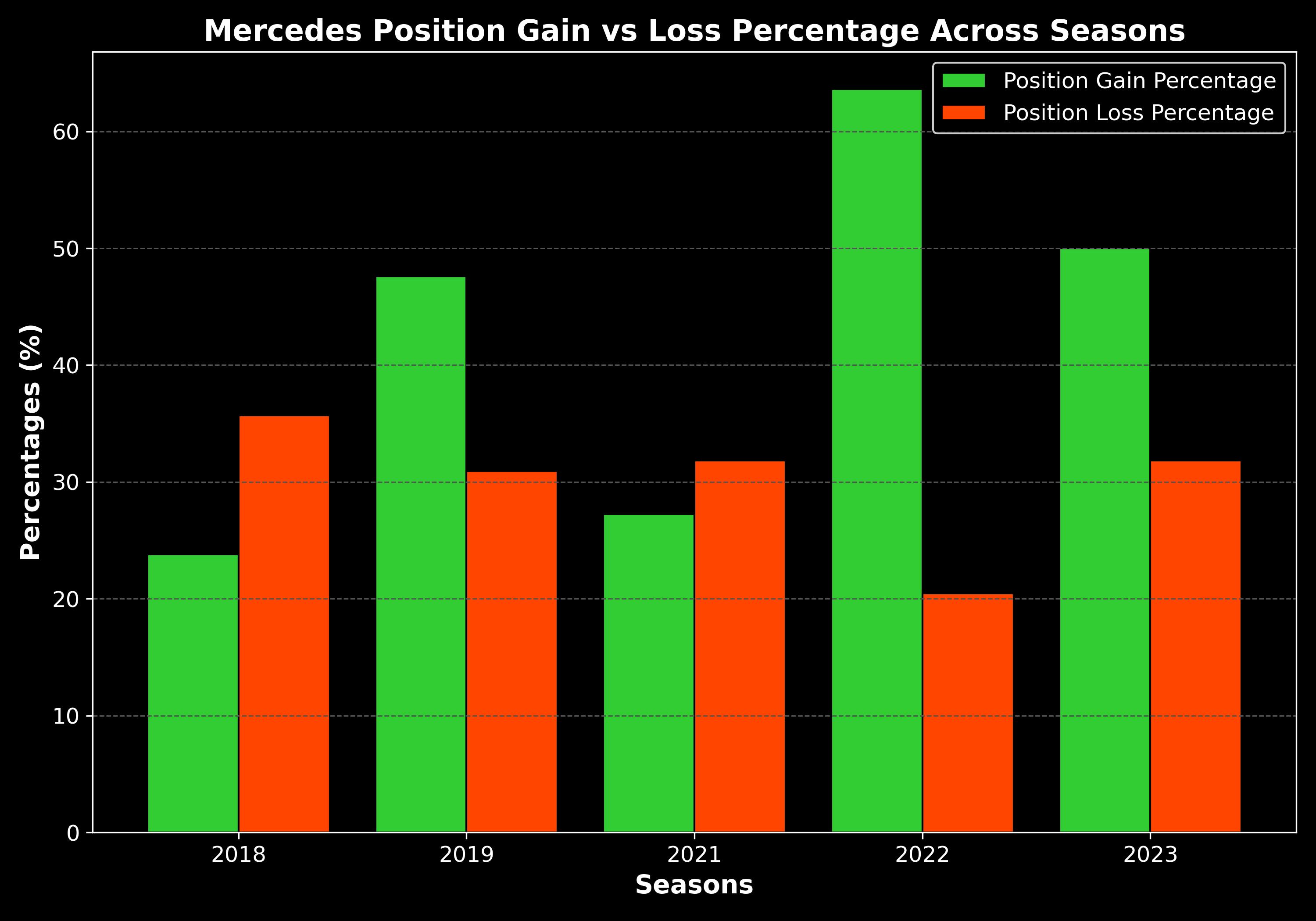
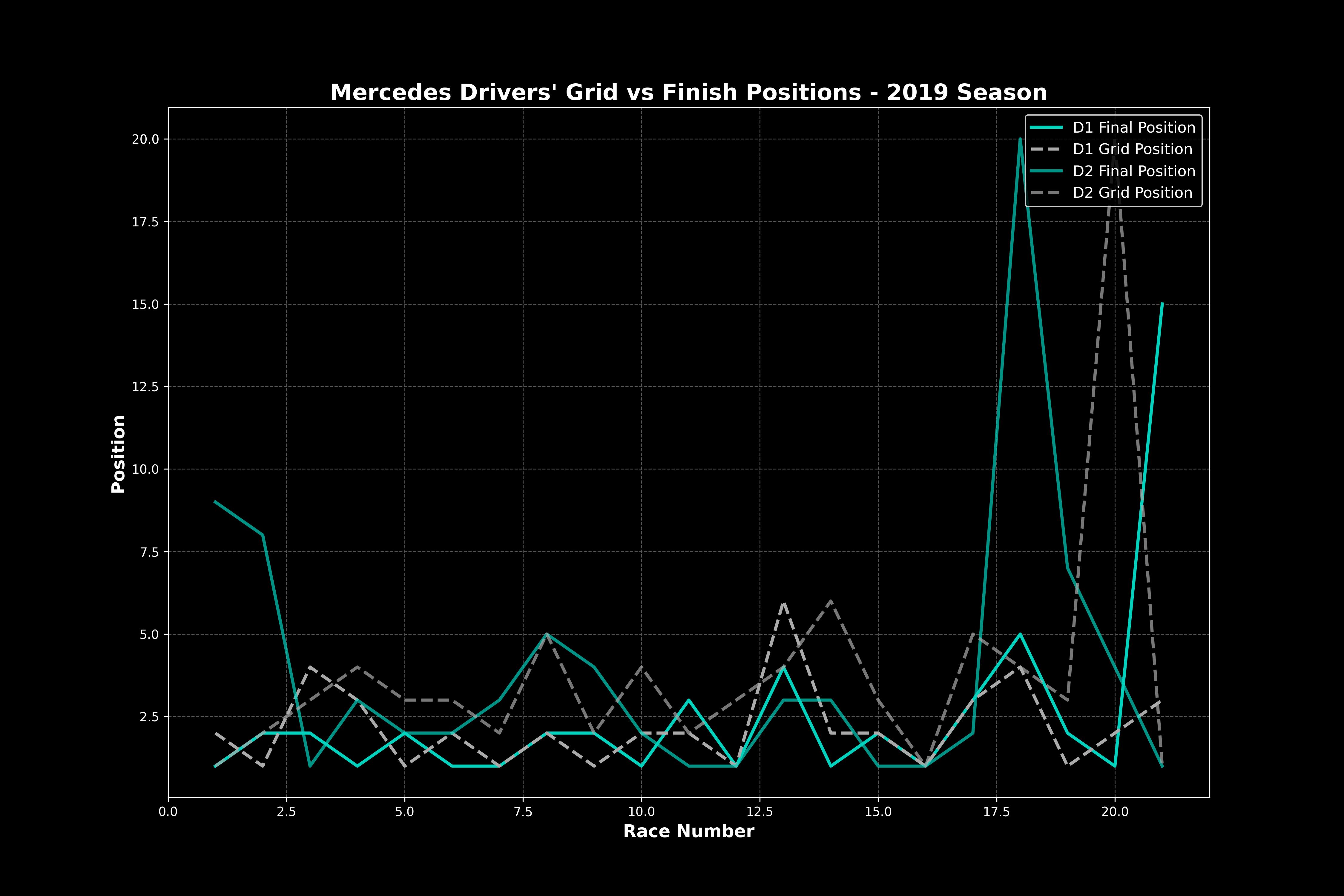
Built an innovative framework combining Self-Organizing Maps (SOMs) and the Apriori algorithm to identify optimal lap sequences in Formula One racing. Analyzed telemetry data including lap times, tire wear, fuel load, and sector breakdowns from Mercedes, Red Bull, and Ferrari across 2018-2023 seasons using the FastF1 API. The system provides actionable insights into lap pacing, tire management, and pit stop timing strategies.
Problem Statement
Formula One teams struggle to identify optimal lap sequences where drivers achieve peak performance under varying race conditions. The complexity of analyzing multiple interacting factors - tire degradation, fuel levels, track conditions, and driver performance - makes it difficult to extract actionable insights for race strategy. Traditional analysis methods fail to uncover hidden patterns in high-dimensional telemetry data.
Approach
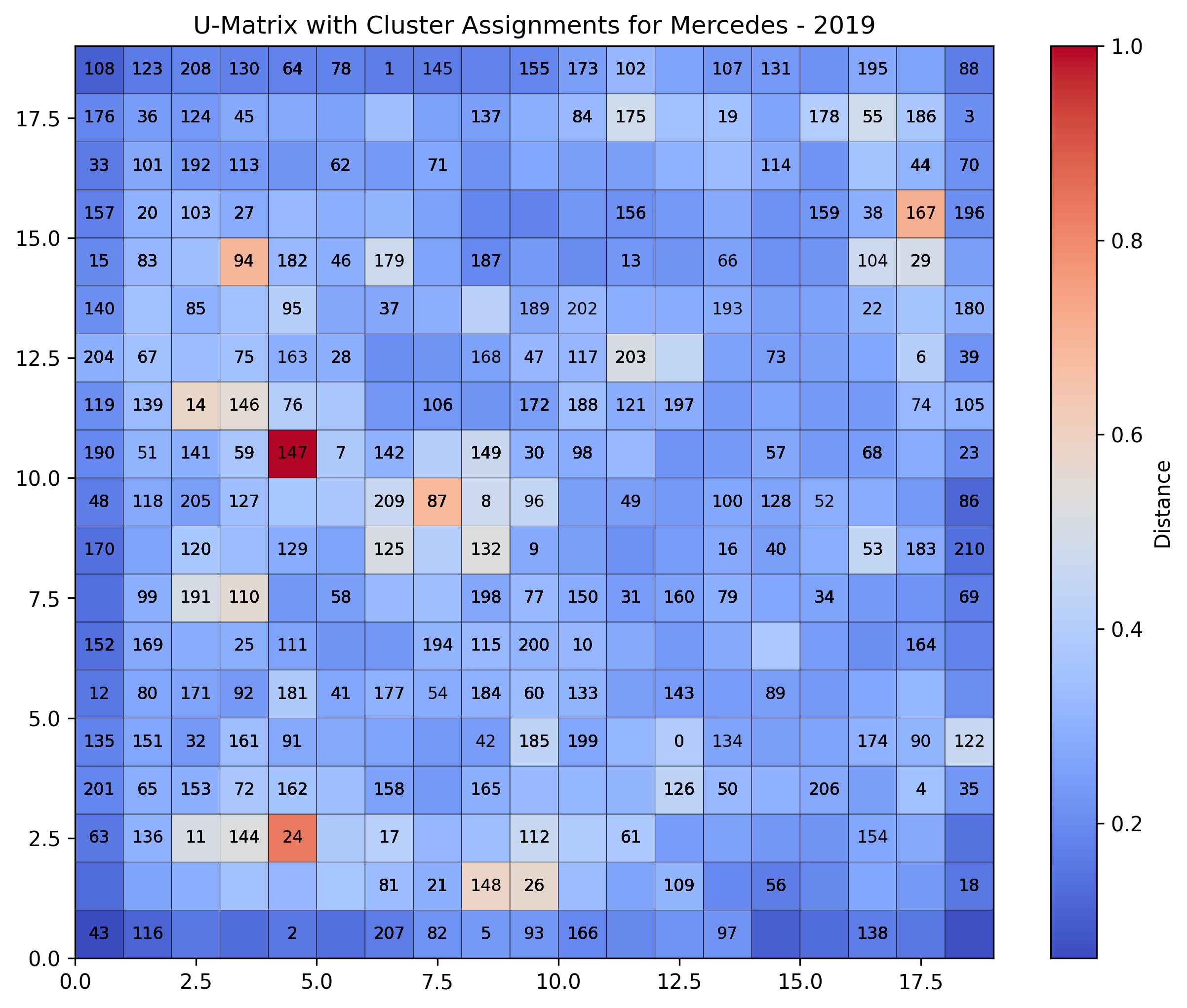
Leveraged Self-Organizing Maps for unsupervised clustering of high-dimensional telemetry data, reducing complexity while preserving topological relationships. Configured SOM with 400 iterations, learning rate of 0.5, and Gaussian neighborhood function. Applied the Apriori algorithm with 0.2 minimum support threshold to discover association rules within optimal lap clusters. Performed extensive feature engineering including fuel load simulation, average sector times, and tire life tracking. Evaluated clustering quality using Silhouette Score, Calinski-Harabasz Index, and Davies-Bouldin Index.
Visualizations
Results
Successfully identified optimal lap clusters with Silhouette Scores ranging from 0.404 to 0.554 across teams and seasons. Discovered key association rules with 100% confidence and 2.0 lift factor, revealing that optimal lap times can be achieved even with high Sector 1 times if Sectors 2 and 3 are fast. Found that soft tires significantly boost Sector 3 performance, and high fuel load negatively impacts Sector 2 times. The analysis showed Sector 3 performance is crucial for overall lap time optimization, providing teams with data-driven insights for tire strategy and fuel management.